Showing posts with label Guns. Show all posts

Monday, December 26, 2022

GUN INFORMATION

1. For whites, “77 percent of gun deaths are suicides.” For black Americans, 82 percent die from homicide: 

https://www.nationalreview.com/corner/racial-disparities-gun-violence-and-gun-control/

2. Deaths Due to Firearms per 100,000 Population by Race/Ethnicity

Black 31.8 White 11.6  Hispanic 7.9  Asian 2.9

https://www.kff.org/other/state-indicator/firearms-death-rate-by-raceethnicity/?currentTimeframe=0&sortModel=%7B%22colId%22:%22Location%22,%22sort%22:%22asc%22%7D

3.The firearm homicide rate among black men aged 20-29 is about 89 per 100,000.

Wednesday, May 18, 2022

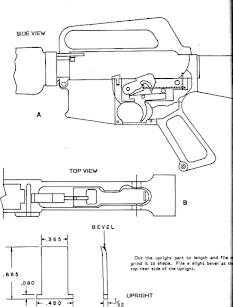
Lightning Link Diagram Layout

Link measurement


Key Tab Measurement(bottom left diagram)


Link Placement


Monday, October 7, 2019

Contest for the gun video guys

You speak about defending our homes. What to do if SHTF etc. I have a challenge for you.
Let's take the scenario that Socialists have declared a national emergency, and this happens.
This is the national guard and cops disarming people, leaving them to the mobs.

What tactics, methods and organization do they need to take? To defend themselves and knowing the emergency order will never be lifted, fight back.
I am going to try to get some responses from several of you gun guys to compare them. I think the gun community fans would like to see what the pros recommend. I think it would be very interesting to your viewers.

Thursday, August 29, 2019

An answer to why other counties seem safer while the are unarmed

Guy Smith
Guy Smith, Founder and lead researcher at the Gun Facts project


I cannot answer for gun enthusiasts, because I’m not one. But I can say that the basic claim that “countries with stricter gun laws are much safer than the U.S.” is inaccurate.
(For people wanting to take a deeper dive, please visit Gun Facts | Gun Control and Crime in non-US Countries)
SAFETY AS A CONCEPT: “Safety” has a lot of moving parts. The basic question is “what is causing danger”. One quick example is that hot home invasions — where thugs break into an occupied home, bind (and often kill) the residents and then take their stuff — is nearly nonexistent in the U.S. and quite common elsewhere.
SAFETY FROM A SOURCE: There have been numerous nations where private guns have been banned and the government has committed mass murder on an industrial scale. Likewise, the type and location of categories of crime rise in many countries with strict gun control.
THE TYPE OF VIOLENCE: One of the sadder data point I have encountered (the table is on this page) is that women in countries with stricter gun control are, as a ratio of men to women, much more likely to be murdered. So “safety” is largely bound to the type of crime and the intended victim.
LOCALITY OF VIOLENCE: The U.S. has an outsized street gang problem (see Gangs and Guns | International Perspective | Gun Facts). Chicago’s gang penetration rate is 314 times higher than London’s. Much of U.S. violence is centered in major metropolitan areas with high gang participation rates, which is why the top 20 U.S. cities for homicides have only 7% of the population but 21% of the murders. As such, most Americans are very safe because they (a) don’t live in the dangerous areas within major cities and (b) by knowing where those areas are and avoid them. So, the notion that Americans are unsafe needs to factor out these crime hubs.
PREVENTON: What the questioner likely has not considered is the prevention aspect. There are over a dozen surveys concerning defensive gun use (DGUs) and the average of these surveys (ignoring the rather oddball outlier) is just under 2,000,000 defensive gun uses each year. One aspect of “safety” is preventing an unsafe activity, such as being robbed, raped, assaulted, etc. Please note these are 2M active DGUs — this does not even begin to take into account the deterrence effect guns have (the established fact that criminals will avoid attacking anyone they think might be armed).
So, back to the question: The questioner asks why “gun enthusiasts so unwilling to see …”
Are they “unwilling”? This data has been well known and well published for a very long time. Is it that “gun enthusiasts” are unwilling or simply better educated on the realities? Hence, I think the question is malformed via an inaccurate understanding of the situation.

Saturday, August 10, 2019

Mass Public Shootings - Study Fooled the World About the U.S. Share of Mass Public Shootings: U.S. Rate is Lower than Global Average

New CPRC Research: How a Botched Study Fooled the World About the U.S. Share of Mass Public Shootings: U.S. Rate is Lower than Global Average

 29 AUG , 2018  
Executive Summary
A paper on mass public shootings by Adam Lankford (2016) has received massive national and international media attention, getting coverage in the New York Times, the Wall Street Journal, plus hundreds of other news outlets spanning at least 35 different countries. Lankford’s claim was that over the 47 years from 1966 to 2012, an enormous amount of the world’s mass public shooters — 31% — occurred in the United States. Lankford attributed this to America’s gun ownership.
Lankford claims to have “complete” data on such shooters in 171 countries. However, because he has neither identified the cases nor their location nor even a complete description on how he put the cases together, it is impossible to replicate his findings.
It is particularly important that Lankford share his data because of the extreme difficulty in finding mass shooting cases in remote parts of the world going back to 1966. Lack of media coverage could easily lead to under-counting of foreign mass shootings, which would falsely lead to the conclusion that the U.S. has such a large share.
Lankford’s study reported that from 1966 to 2012, there were 90 public mass shooters in the United States and 202 in the rest of world. We find that Lankford’s data represent a gross undercount of foreign attacks. Our list contains 1,448 attacks and at least 3,081 shooters outside the United States over just the last 15 years of the period that Lankford examined. We find at least fifteen times more mass public shooters than Lankford in less than a third the number of years.
Even when we use coding choices that are most charitable to Lankford, his 31 percent estimate of the US’s share of world mass public shooters is cut by over 95 percent.  By our count, the US makes up less than 1.43% of the mass public shooters, 2.11% of their murders, and 2.88% of their attacks. All these are much less than the US’s 4.6% share of the world population. Attacks in the US are not only less frequent than other countries, they are also much less deadly on average.
Given the massive U.S. and international media attention Lankford’s work has received, and given the considerable impact his research has had on the debate, it is critical that this issue be resolved. His unwillingness to provide even the most basic information to other researchers raises real concerns about Lankford’s motives.
The paper is available to be downloaded here. A copy of Lankford’s paper is available here.
“The power of this report should convince academic and medical groups to reevaluate all prior statistical studies of mass shootings and the overall public health danger of firearms,” said Professor Arthur Z Berg, M.D., DLF APA, Harvard University emeritus. 
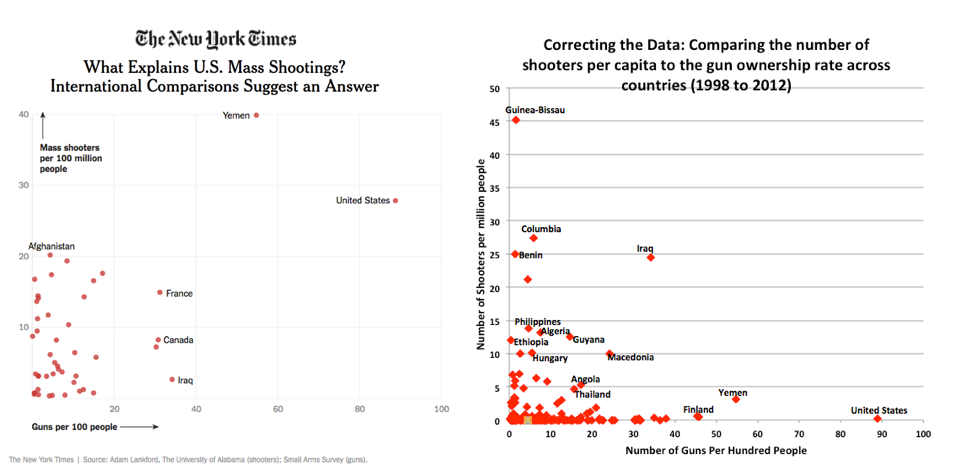
Here is a graph that the New York Times put together using Lankford’s data (data on the rate of mass public shooters by country that has not been released to anyone other than the New York Times) and our graph using the corrected data. While the graph with Lankford’s data shows a positive relationship between the rate of mass public shooters and Small Arms Survey measure of gun ownership (it appears to be driven by the outliers of Yemen and the US), our graph implies a slightly negative relationship. Click on Figures to enlarge.

“Because of faulty research, it is widely believed that a disproportionate share – 31% – of the world’s mass public shooters occurred in the United States,” said Professor Paul Rubin, Samuel Candler Dobbs Professor of Economics, Emory University.  “In fact, John Lott’s careful analysis of a very large data set – 437 – pages – shows that the proper number is about 2%, less than the U.S. share of world population.  One can only hope that this important research will correct the record.”
Professor Carl Moody, College of William & Mary offered the following: “This is an important paper. The assertion that the US is responsible for 31 percent of worldwide mass shooters is patently absurd. Anyone who doubts the veracity of Dr. Lott’s analysis is welcome to download, for free and in Excel format, the entire Global Terrorism Database (https://www.start.umd.edu/gtd/contact/). There they will find, with a simple back of the envelope calculation, that worldwide since 1970 there have been 58,445 mass firearm attacks. Of these, 402 have occurred in the United States. The US is, according to the GTD. responsible for less than one percent of all mass shootings (0.69 percent) since 1970. Dr. Lott’s calculations are much more carefully done, but Professor Lankford’s analysis is clearly not in the ballpark. Also, social scientists seldom have laboratories. Replication is the only way to verify claims. Any academic who refuses to share his or her data for replication purposes deserves to be shunned.”
UPDATE: So what has been Adam Lankford’s response? From outlets from the Washington Post to Real Clear Politics to Fox News, Lankford has refused to answer their questions about his study. As to our research, Lankford told the Washington Times:

“I am not interested in giving any serious thought to John Lott or his claims,” he said in response to an email seeking comment. . . .

This is an amazing response from someone who has refused to provide even the most basic data to other researchers. After reading our study or looking at Appendix 1 listed below, people can judge for themselves the appropriateness of Lankford’s response.
Appendices 1 and 2 for our research on mass public shootings around the world are available here.

Friday, May 4, 2018

National Crime Victimization Survey: Estimate of Guns used for Defense(1992-1994)

This is the National Crime Victimization Survey (NCVS), conducted for the U.S. Department of Justice by the Census Bureau [U.S. Department of Justice, Bureau of Justice Statistics, 1996al. In this survey the false-positive problem is minimized by the design of the questionnaire. The only respondents who are asked whether they attempted to defend themselves in a crime are those who indicated that they had been the victim of a crime in which they had direct contact with the perpetrator. Limiting the DGU question to this small group changes the false-positive arithmetic dramatically. The resulting estimate for the annual number of DGUs (1992-1994) is about 108,000, a small fraction of the Kleck-Gertz estimate
*************************************************

This means that a gun is used to defend someone appx. 100,000 times a year. 295 times a day or 12 times an hour, once every5 minutes.

So how many lives are saved by defensive gun use? Possibly a great many more than are lost.

Black Fragility (Def.) by Mark Dice

  Discomfort and defensiveness on the part of some black people who live in a predominately White culture. Due to fixating on long gone past...