Showing posts with label new green deal. Show all posts

Friday, September 27, 2019

Climate Worship Is Nothing More Than Rebranded Paganism


We're seeing sexualized dances, hallucinogens, worshiping nature, confessing sins in pagan animism, worshiping purified teen saints, all to promote a supposedly greater cause.

Sumantra Maitra
Lynn Townsend White Jr., an American historian from Princeton, wrote an influential essay in 1967, at the height of the cultural revolution in Western campuses, arguing that Christianity and Judeo-Christian values are responsible for ecological disaster and climate change. The essay, naturally, was adapted by generations after, ironically almost like a document of faith.
The central argument went like this. White argued, “The victory of Christianity over paganism was the greatest psychic revolution in the history of our culture. … By destroying pagan animism, Christianity made it possible to exploit nature in a mood of indifference to the feelings of natural objects.”
If nothing else, the last few days should be enough to prove that Western civilization, a product of more than 1,500 years of Judeo-Christian values, is facing its most significant and sustained challenge in centuries from tribalistic paganism, a force that seeks not only to turn back time but essentially to destroy the entire current edifice.

Greta Thunberg and the Church of Mother Earth

As secular liberalism destroyed the fundamental ties that bind society — faith, flag, and family — the human instincts for faith — to believe, worship, submit, and fear — didn’t just go away but manifested in various other pre-civilized tribal ways. For example, a liberal seminary encouraged its students to skip classes to pray and confess sins in front of potted plants. In Switzerland, 250 people in full funereal garb mourned the apparent approaching death of a glacier.
That is why members of “Extinction Rebellion” do what they do. Extinction Rebellion is an apocalyptic cult that wants to radically end every thing around you, from your private cars to the burgers you eat and the plastic chairs in your yard. It is a cult that was formed after its founder took psychedelic drugs and prayed for “social change.” Members have blocked D.C. and London intersections, “twerking” the way people in a pre-civilized era would perform a fertility dance to pray to Gaia.
And then there’s Saint Greta, our perpetual teen of sorrow. I have been comparing her worship to Joan of Arc ever since she was invited to the British Parliament, the birthplace of modern democracy. She was surrounded by buffoons nodding their heads like they were listening to gospel truth.
wrote about her long before the new woke-capital fanatics adopted her as a pawn. In a recent speech to the U.N., while clearly having an emotional meltdown, she told assorted leaders, voice trembling, that they have failed the children and history wouldn’t be kind. The “gatekeepers” immediately hailed her as a brave savior as well as a vulnerable, autistic teen who shouldn’t be bullied.
So, there you have it. Sexualized dances, psychedelic hallucinogens, worshiping nature, confessing sins in pagan animism, worshiping purified teen saints, and throwing them up on an altar, bereft of their childhood, to promote a greater cause. Add to that witches hexing Brett Kavanaugh, and having an Ouija board to invoke the spirit of Karl Marx, and everything old is new again.
The reality is, of course, completely different. Much less than destroying the planet, climate change isn’t even a settled science. Conservatives don’t disagree that climate is changing. That is a straw man. Conservatives, however, are opposed to hysteria, have skepticism about the rate of the climate change, and would like to see an actual cost-benefit analysis of the radical changes being demanded.
More important than that, conservatives understand that climate change is cynically used by a certain section of people to justify their political goals of steering the West away from its way of life, a way they perceive to be evil and harmful, hetero-patriarchal, and capitalist. How? Appealing to the faith-based part of human brains, the need for subservience, and propping up children as human shields.

The Left Created a Climate Crisis and Worships It

Consider a new letter by more than 500 scientists, which the mainstream media completely ignored. It urges the United Nations to have an open debate between scientists from both sides of the argument and states there’s “no climate emergency.” The report goes on to say, among other things:
The world has warmed at less than half the originally-predicted rate; Climate policy relies on inadequate models; More CO2 is beneficial for nature, greening the Earth; There is no statistical evidence that global warming is intensifying hurricanes, floods, droughts and suchlike natural disasters, or making them more frequent; There is no climate emergency. Therefore, there is no cause for panic and alarm. We strongly oppose the harmful and unrealistic net-zero CO2 policy proposed for 2050.
In short, everything you’re being told is wrong or flawed, and you’re a chump who is being taken for a ride.
For all the Marxists’ faults, the old left at least wanted to conquer nature instead of turning subservient to it. Of course, that went to its own extremes, but one can imagine Joseph Stalin putting all twerking climate fanatics as mentally ill people in a forced labor camp to build railroads in Siberia. The current Chinese government, likewise, gives two hoots about climate change, and for all the bravery of Green Peace and St. Greta, there’s nothing they can do about China burning more coal than the rest of humanity combined.
The modern left is a combination of two of the worst impulses in human history. First are the ultra-privileged bourgeoisie, which, having lost their old Judeo-Christian faith, are instinctively attracted to pre-civilized rituals, from overt sexuality to fewer familial ties. Consider Late Roman public orgies, and you get an idea. At the same time, human minds feel a gaping void that still needs to be filled by an alternate faith. It is in that intersection where this occultist, apocalyptic climate paganism comes from. It gives some privileged people a noble purpose.
As French philosopher Pascal Bruckner wrote in his book “The Fanaticism of the Apocalypse: Save the Earth, Punish Human Beings,” the current movement has all the trappings of a religion: saints, sinners, a providential end, apocalyptic fear, punishment, and penance. It appears Emperor Constantine’s children clearly failed to civilize their future generations. The pagan barbarians from the north are back circling outside the citadel.
Sumantra Maitra is a doctoral researcher at the University of Nottingham, UK, and a senior contributor to The Federalist. His research is in great power-politics and neorealism. You can find him on Twitter @MrMaitra.


Copyright © 2019 The Federalist, a wholly independent division of FDRLST Media, All Rights Reserved.

Friday, March 1, 2019

Renewables Can’t Save the Planet


Quillette


Free Thought Lives

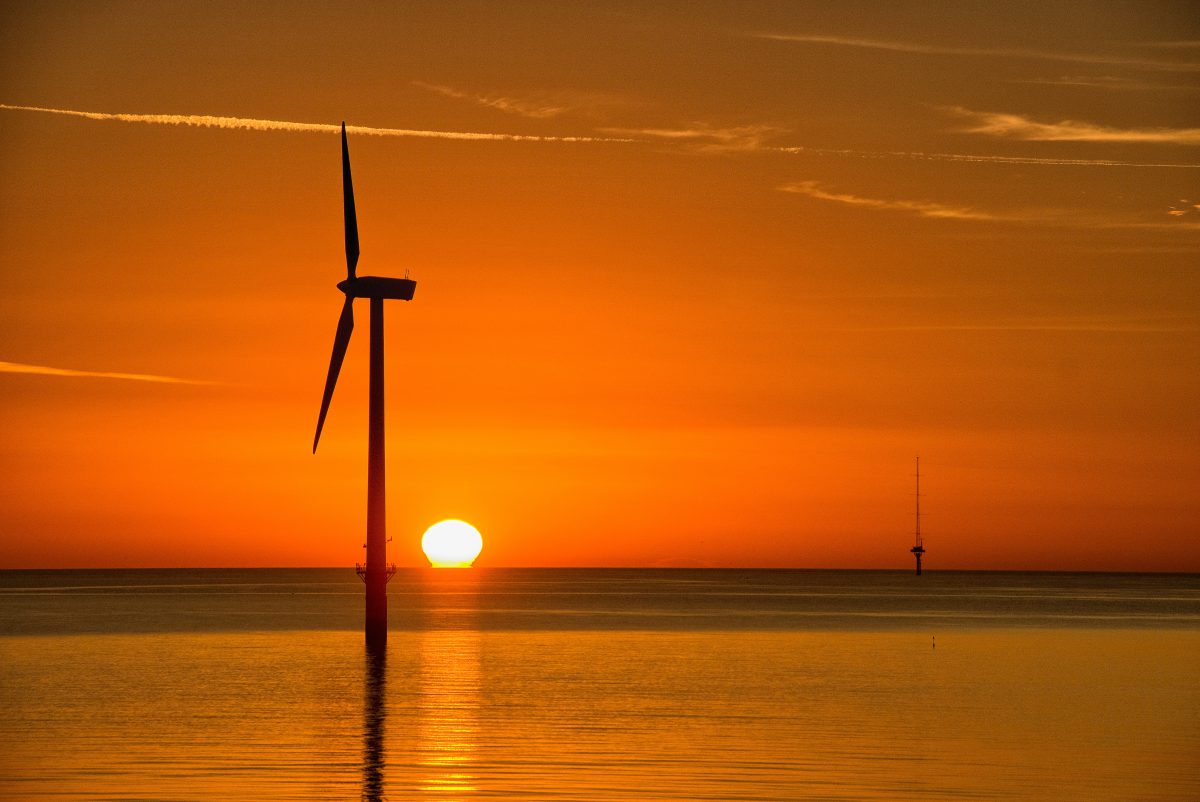
Why Renewables Can’t Save the Planet


When I was a boy, my parents would sometimes take my sister and me camping in the desert. A lot of people think deserts are empty, but my parents taught us to see the wildlife all around us, including hawks, eagles, and tortoises.
After college, I moved to California to work on environmental campaigns. I helped save the state’s last ancient redwood forest and blocked a proposed radioactive waste repository set for the desert.
In 2002, shortly after I turned 30, I decided I wanted to dedicate myself to addressing climate change. I was worried that global warming would end up destroying many of the natural environments that people had worked so hard to protect.
I thought the solutions were pretty straightforward: solar panels on every roof, electric cars in every driveway, etc. The main obstacles, I believed, were political. And so I helped organize a coalition of America’s largest labor unions and environmental groups. Our proposal was for a $300 billion dollar investment in renewables. We would not only prevent climate change but also create millions of new jobs in a fast-growing high-tech sector.
Our efforts paid off in 2007 when then-presidential candidate Barack Obama embraced our vision. Between 2009–15, the U.S. invested $150 billion dollars in renewables and other forms of clean tech. But right away we ran into trouble.
The first was around land use. Electricity from solar roofs costs about twice as much as electricity from solar farms, but solar and wind farms require huge amounts of land. That, along with the fact that solar and wind farms require long new transmissions lines, and are opposed by local communities and conservationists trying to preserve wildlife, particularly birds.
Another challenge was the intermittent nature of solar and wind energies. When the sun stops shining and the wind stops blowing, you have to quickly be able to ramp up another source of energy.
Happily, there were a lot of people working on solutions. One solution was to convert California’s dams into big batteries. The idea was that, when the sun was shining and the wind was blowing, you could pump water uphill, store it for later, and then run it over the turbines to make electricity when you needed it.
Other problems didn’t seem like such a big deal, on closer examination. For example, after I learned that house cats kill billions of birds every year it put into perspective the nearly one million birds killed by wind turbines.
It seemed to me that most, if not all, of the problems from scaling up solar and wind energies could be solved through more technological innovation.
But, as the years went by, the problems persisted and in some cases grew worse. For example, California is a world leader when it comes to renewables but we haven’t converted our dams into batteries, partly for geographic reasons. You need the right kind of dam and reservoirs, and even then it’s an expensive retrofit.
A bigger problem is that there are many other uses for the water that accumulates behind dams, namely irrigation and cities. And because the water in our rivers and reservoirs is scarce and unreliable, the water from dams for those other purposes is becoming ever-more precious.
Without large-scale ways to back-up solar energy California has had to block electricity coming from solar farms when it’s extremely sunny, or pay neighboring states to take it from us so we can avoid blowing-out our grid.
Despite what you’ve heard, there is no “battery revolution” on the way, for well-understood technical and economic reasons.
As for house cats, they don’t kill big, rare, threatened birds. What house cats kill are small, common birds, like sparrows, robins and jays. What kills big, threatened, and endangered birds—birds that could go extinct—like hawks, eagles, owls, and condors, are wind turbines.
In fact, wind turbines are the most serious new threat to important bird species to emerge in decades. The rapidly spinning turbines act like an apex predator which big birds never evolved to deal with.
Solar farms have similarly large ecological impacts. Building a solar farm is a lot like building any other kind of farm. You have to clear the whole area of wildlife.
In order to build one of the biggest solar farms in California the developers hired biologists to pull threatened desert tortoises from their burrows, put them on the back of pickup trucks, transport them, and cage them in pens where many ended up dying.
As we were learning of these impacts, it gradually dawned on me that there was no amount of technological innovation that could solve the fundamental problem with renewables.
You can make solar panels cheaper and wind turbines bigger, but you can’t make the sun shine more regularly or the wind blow more reliably. I came to understand the environmental implications of the physics of energy. In order to produce significant amounts of electricity from weak energy flows, you just have spread them over enormous areas. In other words, the trouble with renewables isn’t fundamentally technical—it’s natural.
Dealing with energy sources that are inherently unreliable, and require large amounts of land, comes at a high economic cost.
There’s been a lot of publicity about how solar panels and wind turbines have come down in cost. But those one-time cost savings from making them in big Chinese factories have been outweighed by the high cost of dealing with their unreliability.
Consider California. Between 2011–17 the cost of solar panels declined about 75 percent, and yet our electricity prices rose five times more than they did in the rest of the U.S. It’s the same story in Germany, the world leader in solar and wind energy. Its electricity prices increased 50 percent between 2006–17, as it scaled up renewables.
I used to think that dealing with climate change was going to be expensive. But I could no longer believe this after looking at Germany and France.
Germany’s carbon emissions have been flat since 2009, despite an investment of $580 billion by 2025 in a renewables-heavy electrical grid, a 50 percent rise in electricity cost.
Meanwhile, France produces one-tenth the carbon emissions per unit of electricity as Germany and pays little more than half for its electricity. How? Through nuclear power.
Then, under pressure from Germany, France spent $33 billion on renewables, over the last decade. What was the result? A rise in the carbon intensity of its electricity supply, and higher electricity prices, too.
What about all the headlines about expensive nuclear and cheap solar and wind? They are largely an illusion resulting from the fact that 70 to 80 percent of the costs of building nuclear plants are up-front, whereas the costs given for solar and wind don’t include the high cost of transmission lines, new dams, or other forms of battery.
It’s reasonable to ask whether nuclear power is safe, and what happens with its waste.
It turns out that scientists have studied the health and safety of different energy sources since the 1960s. Every major study, including a recent one by the British medical journal Lancet, finds the same thing: nuclear is the safest way to make reliable electricity.
Strange as it sounds, nuclear power plants are so safe for the same reason nuclear weapons are so dangerous. The uranium used as fuel in power plants and as material for bombs can create one million times more heat per its mass than its fossil fuel and gunpowder equivalents.


It’s not so much about the fuel as the process. We release more energy breaking atoms than breaking chemical bonds. What’s special about uranium atoms is that they are easy to split.
Because nuclear plants produce heat without fire, they emit no air pollution in the form of smoke. By contrast, the smoke from burning fossil fuels and biomass results in the premature deaths of seven million people per year, according to the World Health Organization.
Even during the worst accidents, nuclear plants release small amounts of radioactive particulate matter from the tiny quantities of uranium atoms split apart to make heat.
Over an 80-year lifespan, fewer than 200 people will die from the radiation from the worst nuclear accident, Chernobyl, and zero will die from the small amounts of radiant particulate matter that escaped from Fukushima.
As a result, the climate scientist James Hanson and a colleague found that nuclear plants have actually saved nearly two million lives to date that would have been lost to air pollution.
Thanks to its energy density, nuclear plants require far less land than renewables. Even in sunny California, a solar farm requires 450 times more land to produce the same amount of energy as a nuclear plant.
Energy-dense nuclear requires far less in the way of materials, and produces far less in the way of waste compared to energy-dilute solar and wind.
single Coke can’s worth of uranium provides all of the energy that the most gluttonous American or Australian lifestyle requires. At the end of the process, the high-level radioactive waste that nuclear plants produce is the very same Coke can of (used) uranium fuel. The reason nuclear is the best energy from an environmental perspective is because it produces so little waste and none enters the environment as pollution.
All of the waste fuel from 45 years of the Swiss nuclear program can fit, in canisters, on a basketball court-like warehouse, where like all spent nuclear fuel, it has never hurt a fly.
By contrast, solar panels require 17 times more materials in the form of cement, glass, concrete, and steel than do nuclear plants, and create over 200 times more waste.
We tend to think of solar panels as clean, but the truth is that there is no plan anywhere to deal with solar panels at the end of their 20 to 25 year lifespan.
Experts fear solar panels will be shipped, along with other forms of electronic waste, to be disassembled—or, more often, smashed with hammers—by poor communities in Africa and Asia, whose residents will be exposed to the dust from toxic heavy metals including lead, cadmium, and chromium.
Wherever I travel in the world I ask ordinary people what they think about nuclear and renewable energies. After saying they know next to nothing, they admit that nuclear is strong and renewables are weak. Their intuitions are correct. What most of us get wrong—understandably — is that weak energies are safer.
But aren’t renewables safer? The answer is no. Wind turbines, surprisingly, kill more people than nuclear plants.
In other words, the energy density of the fuel determines its environmental and health impacts. Spreading more mines and more equipment over larger areas of land is going to have larger environmental and human safety impacts.
It’s true that you can stand next to a solar panel without much harm while if you stand next to a nuclear reactor at full power you’ll die.
But when it comes to generating power for billions of people, it turns out that producing solar and wind collectors, and spreading them over large areas, has vastly worse impacts on humans and wildlife alike.
Our intuitive sense that sunlight is dilute sometimes shows up in films. That’s why nobody was shocked when the recent sequel of the dystopian sci-fi flick, “Blade Runner,” opened with a dystopian scene of California’s deserts paved with solar farms identical to the one that decimated desert tortoises.
Over the last several hundred years, human beings have been moving away from matter-dense fuels towards energy-dense ones. First we move from renewable fuels like wood, dung, and windmills, and towards the fossil fuels of coal, oil, and natural gas, and eventually to uranium.
Energy progress is overwhelmingly positive for people and nature. As we stop using wood for fuel we allow grasslands and forests to grow back, and the wildlife to return.
As we stop burning wood and dung in our homes, we no longer must breathe toxic indoor smoke. And as we move from fossil fuels to uranium we clear the outdoor air of pollution, and reduce how much we’ll heat up the planet.
Nuclear plants are thus a revolutionary technology—a grand historical break from fossil fuels as significant as the industrial transition from wood to fossil fuels before it.
The problem with nuclear is that it is unpopular, a victim of a 50 year-longconcerted effort by fossil fuel, renewable energy, anti-nuclear weapons campaigners, and misanthropic environmentalists to ban the technology.
In response, the nuclear industry suffers battered wife syndrome, and constantly apologizes for its best attributes, from its waste to its safety.
Lately, the nuclear industry has promoted the idea that, in order to deal with climate change, “we need a mix of clean energy sources,” including solar, wind and nuclear. It was something I used to believe, and say, in part because it’s what people want to hear. The problem is that it’s not true.
France shows that moving from mostly nuclear electricity to a mix of nuclear and renewables results in more carbon emissions, due to using more natural gas, and higher prices, to the unreliability of solar and wind.
Oil and gas investors know this, which is why they made a political alliance with renewables companies, and why oil and gas companies have been spending millions of dollars on advertisements promoting solar, and funneling millions of dollars to said environmental groups to provide public relations cover.
What is to be done? The most important thing is for scientists and conservationists to start telling the truth about renewables and nuclear, and the relationship between energy density and environmental impact.
Bat scientists recently warned that wind turbines are on the verge of making one species, the Hoary bat, a migratory bat species, go extinct.
Another scientist who worked to build that gigantic solar farm in the California desert told High Country News, “Everybody knows that translocation of desert tortoises doesn’t work. When you’re walking in front of a bulldozer, crying, and moving animals, and cacti out of the way, it’s hard to think that the project is a good idea.”
I think it’s natural that those of us who became active on climate change gravitated toward renewables. They seemed like a way to harmonize human society with the natural world. Collectively, we have been suffering from an appeal-to-nature fallacy no different from the one that leads us to buy products at the supermarket labeled “all natural.” But it’s high time that those of us who appointed ourselves Earth’s guardians should take a second look at the science, and start questioning the impacts of our actions.
Now that we know that renewables can’t save the planet, are we really going to stand by and let them destroy it?

Michael Shellenberger is a Time Magazine “Hero of the Environment,” and president of Environmental Progress, an independent research and policy organization. Follow him on Twitter 
@ShellenbergerMD

Black Fragility (Def.) by Mark Dice

  Discomfort and defensiveness on the part of some black people who live in a predominately White culture. Due to fixating on long gone past...